Guide to Cat Eye Problems
"Signs of cat eye problems result in symptoms such as redness, discharge and inflammation. Often a veterinarian can diagnose a problem simply from examining the eye (see guide to conditions that cause red eyes in cats below). On occasion, neurological and laboratory tests will help to confirm or reach a specific diagnosis. If problems do not clear within a day or are worsening, seek veterinary treatment to avoid chronic or severe issues that can result in blindness. Take a picture of any early symptoms to provide a clear picture of the problem to the veterinarian. Eye problems in cats can be early warning signs for other diseases such as diabetes mellitus and hypothyroidism. Treatment includes medicated eye drops for bacterial infection and/or an eye wash."
Cat eye problems have several causes. If your cat's eyes appear red or inflamed, if she has unusual drainage from her eyes (some moisture in the eyes is normal and healthy; you will know what is normal for your pet), or if she seems to be having trouble seeing or to be especially sensitive to the light, see your veterinarian for a diagnosis.
Feline Eye Disease Directory - Quick Links
For information on specific feline ocular (eye) diseases click on the relevant topic below.
General Eye Health and Eye ExamsNatural Medicine for Cat Eyes
Summary
of Frequent Cat
Eye Diseases and Conditions
Calicivirus
Cataracts
Chlamydia
Chlamydiosis
Conjunctivitis
Cryptococcosis
Dry Eye
Feline Immunodeficiency Virus (FIV)
Feline Leukemia Complex
Feline Infectious Peritonitis (FIP)
Fungal Infection
Glaucoma
Herpesvirus
Injury
Keratitis (KCS)
Panleukopenia (Feline Parvovirus, FPV)
Cat Pink Eye
Redness in Eye
Protozoal Infections
Toxoplasmosis
Viral Cat Eye Infection
Cat Uveitis
Vision Loss and Feline Eye Disease
Common Cat Eye Conditions
Cat eye infections may become chronic if not treated and can cause permanent damage if neglected.
If you expect allergies or something in the environment are the cause of the cat eye problems, you can try an over the counter saline solution as an eye wash. If you see no improvement after 2 days then see your veterinarian.
Cat Eye Problems
Related
to Redness
If a cat presents with a red eye, the most common symptom, potential causes include:
Local Feline Eye Diseases (affect just the eye)
- Scleritis (inflammation in the sclera, the tough white outer coat
of the eyeball, a part of the eye near the cornea)
- Episcleritis (inflammation of the episcleral tissues, which
overlay the sclera)
- Corneal ulcer or Corneal damage/injury
- Conjunctivitis (inflammation of the
white part of the eye and underside of the eyelid, can be caused by
allergy or infection)
Cat Eye Problems Caused by other conditions in the eye
- Anterior uveitis (inflammation of the uveal tract which includes
the iris, ciliary body and choroid of the eye)
- Glaucoma (rarely primary in cats,
refers to eye pressure)
Cat Eye Problems Caused by other conditions in the body
- Hermorrahage (bleeding) from coagulopathy
- Horner's syndrome
- Orbital disease
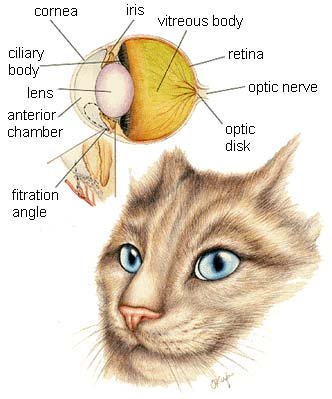
Cat Eye Diagram
Refer to this cat eye diagram to understand which part of the eye is being effected by the different cat eye viral and bacterial infections.
Cat Conjunctivitis (cat pink eye)
Cat conjunctivitis or cat pink eye is one of the most common cat eye problems. It is an inflammation of the membrane covering the inside of the eyelids and the front of the eye, also called the mucous membranes of the eye. It often just affects one eye, although it can affect both. The eye becomes red and inflamed. There may be clear or mucous discharge from the eye. It is usually caused by viruses or bacteria. Less often, it may be caused by parasites or by allergies.
Feline conjunctivitis does not cause a change in vision. Pain is not associated with the disease and redness is moderate to minor. A common primary cause of cat conjunctivitis is chronic irritation and/or exposure resulting from anatomical problems of the lids (entropion, ectropion) or eyelashes (distichia, trichiasis). Irritation may also result from exposure to chemicals, wind and dust.
Treatment for Cat Conjunctivitis
Conjunctivitis is usually treated with medicated (antibiotic) eye drops. These are administered several times a day. In addition, the cause of the conjunctivitis must be treated. This may mean oral antibiotics will be prescribed, or allergy medication given.
An approach you can try at home is to clean the discharge from your cat's eyelids. Wet a soft, clean cloth or cotton ball with lukewarm water, squeeze it out and gently wipe away the discharge from around each eye that is affected. Repeat twice a day or as often as needed.
You can also try a scrub such as an over the counter eye scrub such as Eye Clear. Eye scrubs help keep the lids clean. They are pH-balanced and may cause less stinging than water.
You'll also want to wash the surface of the eye. A good way to do this is with artificial tears, which can help wash away particles that may be causing the problem,
Apply a compress. Covering your cat's eyes with a damp, warm compress can be soothing. Apply for 5 minutes. Rinse the cloth first is applying to more than one eye.
Grooming can help prevent eye irritations by keeping hair out of the eye. Hair around the corners of the eye can cause canine conjunctivitis. Brushing the hair away from the eyes can help.
Feline Glaucoma
Glaucoma in cats refers to a group of cat eye problems where there
is
elevated pressure in the eye (referred to as IOP or elevated
intraocular pressure). Elevated IOP is found in older cats (7 years or
older). Because the pressure is elevated in the eye, it can cause
damage to the retina and optic nerve, ultimately resulting in
blindness. The condition is rare in cats as a primary disease, that
spontaneously occurs in the eye. It is more often the result of another
condition such as intraocular neoplasia (eye tumor) or chronic anterior
uveitis.
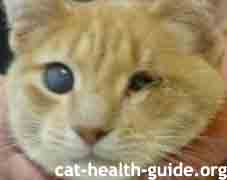
Glaucoma in Left Cat Eye
Older cats also can suffer from a condition similar to glaucoma
(called malignant glaucoma) where the fluid in the eye is misdirected
(aqueous misdirection) or blocked (cilovitreolenticular block).
The most noticeable symptom of glaucoma is a reduced capacity to see. Cats may or may not hasve signs such as redness and eye pain. Because of the lack of signs, sometimes the disease is diagnosed after it has progressed to a chronic stage. In feline glaucoma cases the globe of the eye may be enlarged (buphthalmous) or sunken (enophthalmic) causing the third eyelid to stick out a bit. Bad cases of glaucoma cause pain that could also result in behavioral change.
Symptoms
Early Cat Glaucoma Symptoms:
- loss of eyesight
- red eyes
- excessive tear production (epiphora)
- squinting
- large volume of fluid in the cornea (edema)
- Loss of vision
- Pupil dilation (mydriasis)
- Enlarge eyes (pubhthalmos)
- Lens dislocation relative to the pupil (anterior lens luxation)
- Unable to completely close eyelid - results in drying of the
corneal tear film (called exposure keratitis)
Treatment for Feline Glaucoma
There are five classes of drugs that are use in the suppression of IOP levels. the cause of feline glaucoma.
- aqueous formation suppressors
- miotics
- uveoscleral outflow enchancers
- hyperosmotic agents
- neuroprotection agents
Common drugs include Methazolamide (for corneal pressure), Timolol Opth Soln, Trusopt Ophthalmic Solution (for pressure) and Pilocarpine 2% Ophthalmic Solution.
If drugs cannot reduce IOP levels in
feline glaucoma then surgery
may be called for. Success rates are higher when medications and
surgery are combined. Surgery can include lens removal, or removal
(lensectomy) with a procedure called anterior vitrectomy or posterior
capsulotomy.
Feline Herpesvirus 1
Although most cats are vaccinated for this virus as kittens, it is still possible that the vaccination didn't take hold or booster shots where not administered in the 1 to 3 year interval recommended. This virus effects the eyes, nose and throat and could result in bacterial infections.
Feline Herpesvirus Treatment
Feline herpesvirus treatment includes prescription eye drops to address any resulting eye infections. If your cat is refusing to eat for a period of 3 days due to nasal congestion (cats only eat what they can smell), then feeding through a tube may be required.
Cat Eye Infection Keratoconjunctivitis sicca (Dry Eye)
Keratoconjunctivitis sicca is a condition in which there is inadequate production of tears in the eye. The eyes are too dry and the corneas can be damaged. There is also the risk of ulcers (sores) on the eye. In some cases, this is a chronic infection, requiring long-term treatment.
Treatment for Keratoconjunctivitis sicca
Keratoconjunctivitis sicca is one of the cat eye problems treated with artificial tears (eye drops that are formulated to resemble the composition of natural tears), tear stimulants, and anti-inflammatory eye drops. Oral anti-inflammatory medications may also be prescribed.
Uveitis Cat Eye Infection
Uveitis is an inflammation of the interior of the eye. Symptoms include redness of the eye, sensitivity to light (photophobia), blurred vision, and eye pain. Blindness can occur if it is not treated.
Causes include infectious disease, including viral, bacterial, fungal, protozoal and rickettsial.
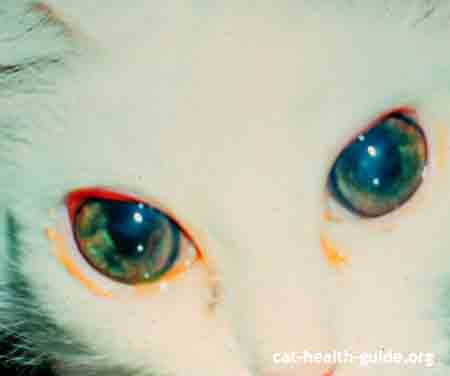
Feline uveitis in a cat with FeLV
Source: Washington State University, Dr. Barbar Stein
Uveitis Treatment for Cat Eye Infection
Uveitis is treated with glucocorticoid steroid eye drops, such as betamethasone, dexamethasone, or prednisolone. Oral steroids, such as prednisone, may also be prescribed.
Natural Treatment for Cat Eye Problems
After checking with your veterinarian regardin any cat any problems, natural approaches to treatment contain herbal tincture and can effectively treat and prevent eye infections in cats as well as improve general eye and visual health.
Common ingredients in homeopathic eye home remedies include:
- Arctium lappa (Burdock) - cleansing and eliminating herb and is excellent at detoxifying the tissues and removing unwanted substances from the body.
- Rosmarinus officinalis (Rosemary) - is well-known as a topical antiseptic/disinfectant, pain-relieving herb with anti-inflammatory effects.
- Chelidonium majus - is used to boost the immune system, combat infections, sharpen sight, promote healing and act as an analgesic (pain killer).
- Filipendula ulmaria (Meadowsweet) - has astringent, antiseptic and anti-inflammatory properties and is excellent for soothing and healing infections of the eyes and conjunctiva.
Pet Alive Eye-Heal combines all of these ingredients and is made expressly for the natural treatment of cat eye problems such as bacterial conjunctivitis and feline eye infection. Check with your veterinarian so that they can monitor progress.
Ask Our Vet a Question about a Cat Eye Problem
Do you have a question about a cat eye problem? Share it! Out veterinarian will answer it for free!
Please let us know about the age of the cat, breed, when any cat eye symptoms began, is the problem in one or both eyes, have the symptoms changed over time, is your cat primarily indoor or outdoor, the presence of other pets, changes in your cats routine, bathing routine, or anything else that will help us understand your cat's medical history, including any tests and results.
If possible, please include a picture. Seeing the eye problem can help us improve suggestions made. Please include information such as breed, age, sex, history, changes in behavior, products used etc.
We will try and respond as quickly as possible. If you have an urgent, non-emergency question we suggest using this online veterinary cat answer service that is staffed by vets and available 24 hours a day. You only pay a small fee for answers you accept.
What Other Visitors Have Asked and Vet Suggestions
Click below to see contributions from other visitors to this page...
Cat Eye Cyst or Mass 
Reader Question: Cyst on Cat Eye
My 17 yrs old cat developed a small bump on the lower lash line. This occurred about 4 weeks ago, the small has …
Kittens Eyes have Matted Up Not rated yet
Reader Question: There are some kittens that have a lot of matter around their eyes. They close up and we have been taking a warm damp cloth and trying …
Non ulcer Keratitus Not rated yet
Reader Question on Eye Endema Followed by Suggestion From Our Vet
My cat has very severe edema with blood vessels in the cornea. Eye ophthalmologist …
Dilated Eyes in Cat Not rated yet
Reader Question on Cat Eye Dilation Followed by Suggestion From Our Vet
I have a cat who has sudden dilated both eyes. It might have been from being …
Cat Eye Lesion Treatment Not rated yet
Reader Question on Cat Eye Infection Remedies
Hi
We are feeding a stray cat that lives in our compound, and I noticed that it has an infection …
Kitten Eyes Will Not Open Not rated yet
I have an 8 month old kitten, who whenever he runs to me, he runs right up to my face as if he doesn't realize I am that close to him. This happens when …
References for Cat Eye Problems
Ron Ofri, DVM, PhD, DECVO
Koret School of Veterinary Medicine
Hebrew University of Jerusalem
Glaucoma, Is Effective Treatment a Reality?
Peter Bedford United Kingdom
New Approaches to Surgical Management of Feline Glaucoma
T. Miller Michau
College of Veterinary Medicine, North Carolina State University,
Raleigh, NC, USA.
