Cat Mange
"Cat Mange is a skin disorder caused by mites skin. It is uncommon in cats but can occur. Mites can cause a localize from of the condition that starts on the ear, face and neck. Left untreated it can spread throughout the body and become what is known as a generalized form of the condition. Common symptoms include itch, dandruff, hair loss and sores. Treatment is with a lime-sulfur dip and prescription medications."
Cat mange is caused by two types of mites, burrowing mites and non-burrowing mites. Burrowing mites burrow in your cat's skin forming tunnels in which they lay their eggs. Larvae emerge, develop to nymphs then adults. The non-burrowing mites feed on skin scales; some suck tissue fluid and several suck blood.
Pictures of Cat Mites
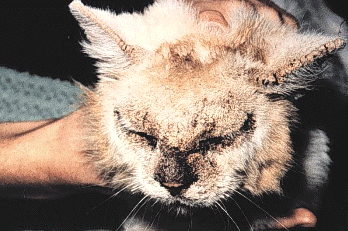
Types of Cat Mange
Ear MItes (Otodectic Cynotis) : Ear mites are the most common form of mange in cats. The mites feed on scaling skin. This is a different condition from head manage and is caused by a different type of mite that does not burrow into the skin. Common symptoms include irritation and inflammation of the ear canal. In severe cases you will see a substance oozing from the ear and red, scaly skin from secondary infections caused by bacterial or fungal infections.Notoedric manage (also called head mange or cat scabies) : This type of mange causes hair loss and crusty skin from mites burrowing under the skin. It is very itchy and causes cats to scratch excessively. The scratching can cause sores and bleeding of the skin. This form of mange is very contagious and can spread to humans or other animals.
Rare forms of Mange in Cats
Demodectic mange: This type of mange causes hair loss and small red, inflamed patches of skin. It may be localized, meaning it is restricted to a small area of the body, or generalized, meaning that it covers a large portion of the body. In severe cases, a bacterial skin infection may occur. This condition is rare in cats.
Cheyletiella Mange (also called walking dandruff): Caused by a large red mite on the skin that produces flaking that looks like dandruff. Symptoms are usually seen on the back, neck and sides and include itching and red raised bumps. Although rare in cats, it is highly contagious for humans and other animals.
Chiggers (Trombiculid Mites): The mites look like red, orange or yellow spots on the skin. Symptoms are red sores, scabs and raw skin.
Sarcoptic Mange: Causes hair loss and crusty skin in dogs. Rare in cats.
Cat Mange Diagnosis
Your veterinarian will scrape your cat's skin and analyze the sample under a microscope for mites. The diagnosis for demodectic mange and sarcoptic mange is based on the type of mite that is found. Cigar shaped mites are demodectic and round mites are notoedric.Since diagnosis are only accurate 50% of the time (mites may have been removed by your cat's constant scratching, leaving only itchy toxins behind), most owners will treat for mange and see if there is a reduction in symptoms.
Cat Mange Treatment
The preferred treatment is Ivermectin which your veterinarian will apply to the skin. For notoedric manage, it is usually given by injection, weekly for four weeks. An alternative that can be performed at home is a sulfur dip that can be combined with your cat's shampoo such as Naturasil for Mange.To prevent recurrence your Veterinarian may also recommend a product like Revolution that contains the active ingredient selamectin.
Medicated shampoos may also be prescribed. Do not use products that have been prescribed for dogs on cats unless your vet tells you to; they may not be safe for use on cats. Dandruff shampoos can also help.
Cortisone may be prescribed to relieve the itching. Topical antibiotic solutions may be prescribed to treat any open sores on the skin, while oral antibiotic medication will be prescribed for any bacterial skin infections that may have resulted from excessive scratching.
Notoedric mange is very contagious, so all household pets should be treated, whether they have symptoms or not. Demodectic mange is not contagious so you don�t need to worry about treating other pets unless they show symptoms.
With any type of mites, all bedding should be washed in hot water and the surrounding areas disinfected. This will prevent reinfestation. To treat your cat's environment you might want to consider a product such as Benzarid which is made to safely remove mites from inside your home.
Sources
The Doctors Book of Home Remedies for Dogs and CatsPrevention Magazine
Mueller, R. S. (Ed.)
IVIS
Dermatology for the Small Animal Practitioner
Mange in Cats
King, Ron
Share Your Questions and Stories on Treating Scabies and Mange
Help other owners who are treating cats with mange or ask your questions and our Veterinarian will answer for free!
Please provide details such as your cats skin condition, age, breed and other medications. Submit pictures if you can below.
Our Veterinarian will respond as quickly as possible, which is based on the number of questions received.
If you have an urgent non-emergency question we suggest using this online veterinary cat answer service that is staffed by vets and available 24 hours a day.
What Other Visitors Have Asked and Responses from our Veterinarian
Click below to see contributions from other visitors to this page...
Cat With Mites In Ear 
Reader Question: How Severe Is It For A Cat To Have Mites In Its Ear?
Recently my cat was diagnosed with mites in his ears . It’s black in color …
Feline Fur Loss
I read where others have stated that they have experienced cat fur loss, but with raised patches and/or sores, with the cat scratching alot.
My cat …
Cat Mites - How Do I Know if I Have Them Too?
If my cat has mites how do I know I don't have them and how is it treated?
Answer from Cat Health Guide Editor:
Cat mites can spread from your …
Cat scabies to Humans
I recently took care of a orphaned kitten for about 3 weeks. I then found out from its new owner that it had scabies. Some sites say that it is not transmittable …
Isolate Suspected Cat with Mange from Other Pets Not rated yet
My cat may have mange, and he's going to the vet tomorrow, Do I need to keep him away from the couches, beds, or my dog?
Editor Suggestion Cat Mange …
Cat Sarcoptic Mange and Growth Not rated yet
By my house there is a cat colony that has become infected with sarcoptic mange. A few of the kittens I caught and took to the vet and found them homes. …
Stop Spread of Cat Mange Not rated yet
What to do about the stray cat that is living in the basement of a house I'm looking at buying. It is getting in through a hole under the foundation. …
Kitten Mange Not rated yet
How can I treat a 7 week kitten with mange?
The vet has diagnosed mange for my little 7 week old kitten, but the treatment he gave me is Frontline spray, …
Cat Fur Loss Not rated yet
Cat Fur Loss Reader Question:
Hi, we have 2 year old spayed female cat. She has had small scabs on her since the early summer.
We thought from …
Kitten Mange and Diarrhea Not rated yet
Reader Question Regarding Cat Mange and Diarrhea:
We picked up a severely dehydrated kitten that also has a serious bacterial infection. The vet gave …

Cat Mange Treatment Not rated yet
Reader Question
I'm looking after a stray cat and cant afford to take it to the vets as i have 2 other cats. his skin is raised and lumpy and has …
