
Giardia in Cats: Symptoms, Treatment, Cleaning and Natural Remedies
Key Takeaways
- Giardia is a tiny intestinal parasite that spreads through infected stool. Many cats carry it with no signs, while others get soft, pale, smelly diarrhea.
- Your vet diagnoses it with stool tests, often more than one, because cats shed the parasite on and off.
- Vets treat it with fenbendazole, metronidazole or both. Cleaning the litter box daily and bathing your cat help stop reinfection.
- People rarely catch Giardia from cats. Cats usually carry a cat-adapted type. Wash your hands after handling your cat's litter.
- Never give garlic, which is toxic to cats. Grapefruit seed extract and oregano oil are unproven and may be unsafe.
What Is Giardia?
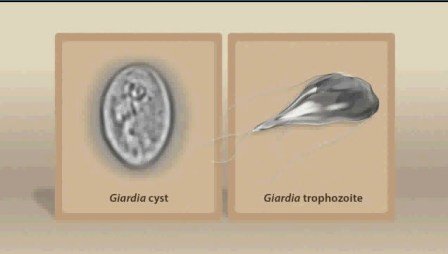
Giardia is a single-celled parasite that lives in the small intestine. Infected cats pass cysts in their stool, and the cysts can infect another animal as soon as they are passed [1][3]. Cats pick them up by swallowing something contaminated: water, food, soil, a shared litter box, or their own fur when they groom [1][2].
Cysts can survive for weeks or even months in cool, damp places, but they don't survive drying out [3][4]. Cats can start passing cysts 3 to 10 days after they are infected, and they shed cysts on and off rather than all the time [3].
Giardia is fairly common. In a 2023 US lab survey, about 5% of cat stool samples were positive, and the rate is higher in cats with diarrhea [1]. Kittens and cats in crowded places such as shelters and catteries are most at risk [2][3].
Symptoms of Giardia in Cats
Many infected cats show no signs at all [1][3]. When signs do appear, they usually include [1][3][4]:
- Diarrhea that comes on suddenly or keeps coming back
- Soft, pale, foul-smelling stool that may look greasy or contain mucus
- Weight loss in long-lasting cases
Vomiting and fever are uncommon [1]. Kittens are more likely to be ill than adult cats [2].
How Vets Diagnose Giardia
Your vet will test a stool sample. Common tests include [1][3][4]:
- Fecal flotation with zinc sulfate, which lets the vet see cysts under the microscope
- A Giardia antigen test (ELISA), which can be done in the clinic or at a lab
- Immunofluorescence (IFA) or PCR at a lab
Because cats shed cysts on and off, one negative test doesn't rule Giardia out. Guidelines suggest testing three samples collected over 3 to 5 days [3][4]. Antigen tests and PCR can stay positive after successful treatment, so they shouldn't be used on their own to decide whether a cat is cured [1].
Treatment
No medicine is officially approved for Giardia in cats in the US, so vets use drugs approved for other uses [1][3]. The main options are [1][3][4]:
- Fenbendazole (sold as Panacur), a dewormer that also works against Giardia
- Metronidazole, an antibiotic with activity against Giardia
- A combination of the two
European guidelines prefer fenbendazole first and keep metronidazole for cases where fenbendazole fails, because of side effects and antibiotic resistance [4]. CAPC reports that metronidazole may work in as few as 50% to 60% of cases [1]. Never give a cat albendazole, which CAPC says is not safe in cats [1].
Your vet will tell you the dose and how long to give it. Give every dose, even if the diarrhea stops early. The goal of treatment is to stop the diarrhea. A cat can keep shedding a few cysts without being sick [3].
What about cats that test positive but have no signs? CAPC's experts mostly say they may not need treatment, and European guidelines generally don't treat healthy cats that test positive [1][4]. Ask your vet what makes sense, especially if you have other pets or a person with a weak immune system at home.
Why Giardia comes back
Cats can be reinfected right after treatment, especially in homes, shelters or catteries where cysts are still in the environment [1][3][4]. Treatment can also fail because of drug resistance or a weak immune system [1]. That's why cleaning matters as much as medicine.
Cat Health Guide earns a commission if you use JustAnswer through this link.
Cleaning Checklist to Stop Reinfection
Use this checklist every day during treatment and for a few days after the last dose [2][3][4]. Tick items off as you go, or print the page.
Disinfectants can't kill Giardia in soil or grass, so keep cats away from outdoor areas where infected animals have pooped [2].
Can People Catch Giardia from Cats?
It's possible but unlikely. The CDC says you are unlikely to get a Giardia infection from dogs or cats [2]. Merck says spread from pets to people seems to occur relatively rarely [3]. Cats mostly carry a cat-adapted type of Giardia (assemblage F), while people are mostly infected with types A and B. Cats sometimes carry type A, which is one reason to wash your hands [1][3][4].
Still, wash your hands after handling your cat's litter or stool, and take extra care if someone in your home has a weak immune system [1][2]. Anyone in the household with diarrhea should see their doctor [4].
Natural Remedies for Giardia in Cats: Do They Work?
Natural remedies get a lot of attention online. Here's what the evidence says:
| Remedy | What the evidence shows | Our verdict |
|---|---|---|
| Garlic | No evidence it treats Giardia in cats. Cats are the species most sensitive to garlic and onion poisoning, which destroys red blood cells. Garlic is 3 to 5 times more toxic than onion [5]. | Never give it. It's poisonous to cats. |
| Grapefruit seed extract | No studies in cats. Lab tests found that most products contained synthetic preservatives, and their germ-killing effect came from those added chemicals [7]. | Avoid. Unproven, and you can't know what's in it. |
| Oregano oil | Only lab studies on Giardia cysts in a dish [8]. No animal studies. Cats are especially sensitive to essential oils containing phenols [6]. | Avoid. Essential oils can poison cats. |
| Probiotics | No studies in cats. In a trial in 20 dogs, a probiotic didn't reduce Giardia shedding [9]. | Unlikely to treat Giardia. Ask your vet whether one makes sense for gut health alongside treatment. |
| Homeopathic Giardia remedies | We found no studies showing that homeopathic remedies treat Giardia in cats or dogs. | Don't use them in place of treatment. |
The bottom line: the treatments that work are the ones your vet prescribes, plus good cleaning. If your cat is having trouble with medicine, or the diarrhea keeps coming back, ask your vet about other options rather than switching to unproven remedies.
What the Research Shows
- Treatment doesn't always work the first time. CAPC reports metronidazole efficacy as low as 50% to 60% in some studies [1].
- People rarely catch it from cats. Cats mostly carry assemblage F, which is adapted to cats, while people are mostly infected by assemblages A and B. Some cats carry assemblage A, so the risk is low but not zero [1][4].
- Probiotics didn't help in dogs. In a randomized crossover trial in 20 dogs, a probiotic didn't reduce cyst shedding or Giardia antigen [9].
- "Natural" extracts may not be natural. A lab analysis found that 5 of 6 grapefruit seed extract products contained the synthetic preservative benzethonium chloride [7].
Questions Owners Ask
How long does Giardia last in cats?
With treatment, the diarrhea usually clears, but cats can be reinfected right away if their environment is still contaminated [1][4]. Follow your vet's full treatment plan and clean daily until a few days after the last dose [2].
What does Giardia poop look like in a cat?
Typically soft, pale and foul-smelling, sometimes greasy or with mucus [1][3]. Many infected cats have normal stool [1].
Can I cuddle my cat with Giardia?
Yes. The risk to people is low [2][3]. Wash your hands after handling your cat, especially after cleaning the litter box, and bathe your cat as your vet suggests to remove cysts from the fur [2][3].
Does Panacur treat Giardia in cats?
Fenbendazole, sold as Panacur, is one of the main treatments vets use for Giardia in cats, alone or with metronidazole [1][3][4]. Use it only as your vet prescribes.
Why is Giardia so hard to get rid of?
Cysts survive for weeks in damp places, cats shed them on and off, and cats reinfect themselves by grooming. Treatment can also fail because of drug resistance [1][3][4]. Daily cleaning and bathing make treatment more likely to work.
What kills Giardia cysts in the house?
Quaternary ammonium disinfectants, steam and boiling water inactivate cysts. Leave disinfectants on for 5 to 20 minutes and let surfaces dry completely [3].
Can I treat Giardia in my cat naturally?
There's no evidence that natural remedies cure Giardia, and some are dangerous. Garlic is toxic to cats, and essential oils such as oregano oil can poison them [5][6]. Use the treatment your vet prescribes.
Can my dog catch Giardia from my cat?
Dogs and cats usually carry different types of Giardia, but they can occasionally share other types [1]. Clean shared areas and ask your vet whether your other pets should be tested.
Have a question about your cat? Send it to our editors or see where to get help fast. Related: cat diarrhea treatment.
Have A Question about a Cat Giardia Problem or Have a Story That Will Help Others?
Do you have a question or story about a feline giardia related problem for our editors to answer? Share it! We'll do our best to answer it.
If possible, please include a picture and include information such as breed, age, sex, medical history, changes in behavior, products used, indoor or outdoor etc.
We receive many questions, so it might take a while to respond. If you have an urgent question we suggest using this online cat veterinary answer service that is available 24 hours a day.
Other Visitor Questions and Answers
Click below to see contributions from other visitors to this page...
Cat Giardia Nightmare 
We are in the midst of a cat giardia nightmare. We recently rescued two younger cats from a local shelter, a male (TUX..approx/10 months old) and a female …
Cat Will Not Take Giardia Medication Not rated yet
My 15 month old female cat was just diagnosed with Giardia. Vet gave me Panacur Suspension vials to use for treatment. I am 77 with some arthritis in my …
Kitten Giardia Treatment and Resistance Not rated yet
I have a 6 month old kitten and a 4 month old kitten. They have been diagnosed with Giardia. The test came back positive from a swab. My question is …
Sources
- Companion Animal Parasite Council. Giardia. Updated August 2026.
- Centers for Disease Control and Prevention. About Giardia and Pets.
- Robertson LJ. Giardiasis in Animals. Merck Veterinary Manual, 2026.
- ESCCAP. Guideline 06: Control of Intestinal Protozoa in Dogs and Cats. 3rd ed., 2025.
- Hayes C. Garlic and Onion (Allium spp) Toxicosis in Animals. MSD Veterinary Manual, 2024.
- Benson K. Toxicoses From Essential Oils in Animals. Merck Veterinary Manual, 2025.
- von Woedtke T, Schlüter B, Pflegel P, et al. Aspects of the antimicrobial efficacy of grapefruit seed extract and its relation to preservative substances contained. Pharmazie. 1999;54(6):452-456. PubMed
- Effect of Origanum vulgare hydroalcoholic extract on Giardia lamblia cysts compared with metronidazole in vitro. Iranian Journal of Parasitology.
- Simpson KW, Rishniw M, Bellosa M, et al. Influence of Enterococcus faecium SF68 probiotic on giardiasis in dogs. J Vet Intern Med. 2009;23(3):476-481. doi:10.1111/j.1939-1676.2009.0283.x