Tips for Selecting Cat Litter Brands and Boxes
"Deciding which cat litter is best can be a process of experimentation until you find the one that works for your cat. Most cats prefer a litter that has a fine grain and is soft. Other popular characteristics are dust free small grain clay and clumping litters (most popular type). Most cats do not like litter brands that have pellets, or that has an unfamiliar scent. There are also special litter choices that are made for cats with health problems such as feline asthma. For most cats without health concerns a low cost clay litter is the best way to go as long as your cat likes the litter selected. One technique is to have your cat choose the litter by providing 3 boxes to choose from. Keep the litter box that your cat favors. Litter boxes should only be filled to the 2 inch mark, with feces scooped out every day. Litter should be changed 2x per week. To wash a litter box, avoid products that have a scent, with many choosing soap and water, which is a perfectly acceptable option."
Cat litter selection preferences depends on what your cat likes and your budget. The key is to keep the litter odor free and dry so that your cat doesn't mind using the box when he or she urinates or defecates.
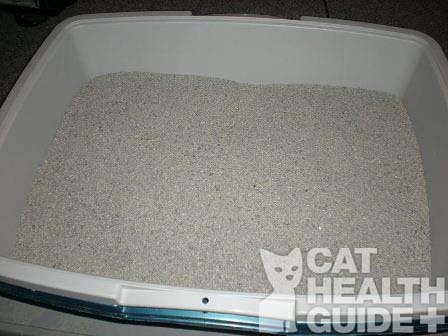
Fresh Cat Litter
Source: Wikipedia/CambridgeBayWeather
This is an important matter as inappropriate elimination is one of the most frequent feline behavioral complaints. Most problems can be avoided by selecting a litter that is acceptable to your cat, and a litter box location that makes the kitten or cat feel safe and secure. Said another way, make is so the cat prefers to use the litter box instead of urinating in inappropriate places.
Tip: When bringing home a new kitten, do not put the litter box next to the food dish, since cats will not go to the bathroom in the same area that they eat.
Deciding Which Cat Litter is Best
Some cats have a preference for specific litter materials which could be based on their early learning experiences. It usually varies by the feel of the material such as carpet, wood floor or linoleum. Textures vary by granularity, and coarseness.
Research shows that cats prefer fine materials. These include a finely textured clay litter, a fine grain litter or sand. This preference was expressed even over popular choices such as wooden pellets. Other common materials are rice husks and diatomite. A low cost solution is to use newspaper as a liner and newspaper strips as the litter material.
Clumping Cat Litter and Health Concerns
Most cat owners choose to buy clumping litter, which forms clumps after absorbing cat urine. The clumps are easy to scoop and are designed to control urine odor. Cats in general like a clumping litter over a clay litter. The problem with clumping clay cat litter is that there are some health concerns with the ingredient silica quartz, a component of many clumping litter brands. This is a known carcinogen if inhaled. For this reason, owners should wear a mask when scooping or disposing clumped litter to avoid inhalation of any dust. There is also some concern by owners that a cat will ingest the litter, causing a blockage. Most veterinarians believe that this is not a common problem, and that there is no cause to be concerned about any health risk.
Specialty Cat Litter for Specific Cat Health Conditions
Manufacturers have created cat litter for specific feline health concerns or behavioral problems. Note that these can cost more than regular cat litter. The following table describes each litter health type and recommended brand:
Cat Liter Health Type And Recommendations |
||
|---|---|---|
|
Feline Health Condition or Behavioral issue |
Cat Litter Type |
Recommended Brand |
|
Open Wounds, Post Surgery |
Paper |
|
|
Respiratory Issues (feline asthma) |
Wood ((avoid clay and clumping litter) |
|
|
Urination outside of litter box |
Litter additive |
|
The Best Cat Litter Brands
As mentioned cats tend to prefer litter that resembles fine granules or sand. In our opinion clumping litter is the most hygienic for adult cats since you can easily identify areas that need to be scooped. Since cats can a strong sense of smell we also prefer brands that are unscented.
According to Lisa A. Pierson, DVM, typical litter types and suggested best feline litter brands are the following. All selections are flushable and biodegradable.
- Dr.
Elsey's Precious Litter is recommended as the best cat litter
brand since clay is the least likely to aggravate asthma in cats since
it has low levels of dust. This brand is also flushable
(note that not all clay litter brands are flushable. Click
here for Dr.
Elsey's reader reviews.
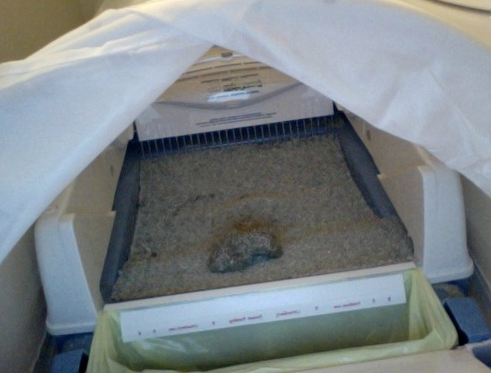
Dr. Elsey's Cat Litter in Pan - The corn based World's Best Litter Original Formula. Click here for Worlds Best Cat Litter reader reviews.
- Wheat based Swheat Scoop Natural Wheat Litter. Click here for Swheat Scoop reviews.
- Pine based Feline Fresh Clumping Natural Pine Cat Litter.
Click here for Feline
Fresh Pine Litter reader reviews.
Helpful natural feline litter information is also available at Main Coon Cat Nation. See our complete list of cat and kitten litter ratings.
Switching Cat Litter Brands and Material
If you are switching the litter in a litter box do it gradually. Over time replace some of the litter you are currently using with the new litter. Eventually you will replace all the litter.
Cat Litter Box Selection
In general, buy the biggest litter box you can. Cats like to have room. One side of the box should be lower than the others to make entering the box easy. You might want to have a cardboard box on hand for easy travel and disposal.
Some litter boxes have hoods or are enclosed. This type might not be ideal since urine may get on the walls and are therefore more difficult to clean and keep odor free.
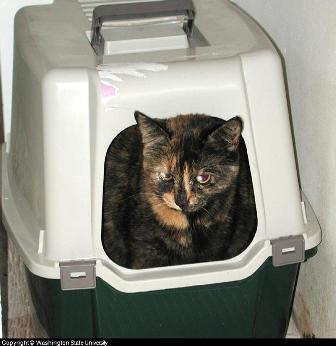
Covered Cat Litter Box
Source: Washington State University
Many believe that the best litter box is one with deep sides to keep urine and litter inside the box and that has no cover. Most cats are fine with a standard plastic box.
The advantage of a cover is that is provides your cat with privacy and blocks odor, litter and urine from leaving the box. The problem with the cover is that it traps dust and if odor builds up, your cat might avoid the box unless it is cleaned frequently.
You can't go wrong with a large basic box as long as you frequently keep it clean. Cat litter box liners are a matter of preference for your cat. Some have no problem with them, while others do not like them.
Number of Cat Litter Boxes Needed
You should have a litter box for each cat in your home plus 1. Your cat (s) should be able to easily access the box. These boxes should be located in different locations. Your cats preference for sharing a box or wanting one of its own is dependent on how your cats relate to each other.
Litter Box Location
Litter box location should provide a cat with privacy and a feeling of safety. It should also be in a convenient location. While many owners like to place the litter box in a basement, this may not work for a cat that has trouble navigating steps or dislikes cold floors. Cats may also avoid a litter box that is near loud noises such as a home heating system.
Outdoor cats in particular prefer litter boxes that are in a more private place vs. a busy hallway or near a place where other pets sleep such as a dog. Some cats prefer a covered tray.
Kitten Litter Box Training
Kittens should be trained to use a litter box on the first day in your home. Begin training by putting the kitten in the box after a play session or you believe it is going to urinate or defecate.
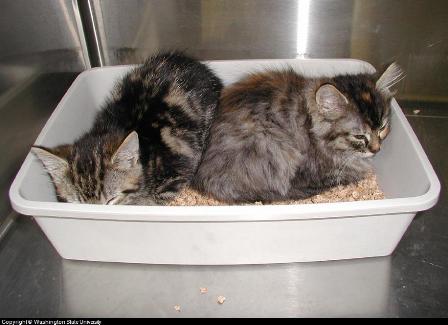
Kittens in Litter Pan
Source: Washington State University
During training, always leave some urine and feces behind. Your cat will smell it and know that the box is for going to the bathroom. That said keep the box clean by removing solids every day and stirring the litter so your kitten never encounters a wet surface.
DO NOT use the litter box as a punishment or any time you are scolding your cat since they will associate the box with a bad experience.
Cat Litter Box Cleaning
Litter that clumps should be replaced as soon as the litter starts to smell. Other types of litter should be changed weekly. Remember that cats to not like wet or dirty litter. Failure to clean the litter could result in your cat not wanting to use the litter box.
It is important to keep the litter box clean by scooping it at
least once a day. The threshold for cleaning trays will vary enormously
between cats with some wanting the tray cleaned each time they use it
and others tolerating less frequent
cleaning. The litter should be completely changed and the box
washed with mild soap and water every 1 to 2 weeks. It’s also a good
idea to place the litter box in the cat’s core area - where he spends
most of his time. Ideally, it should be placed in an area that’s quiet
and well-lit, away from the food and water.
Click here for a review of cat and kitten litter and health issues.
If you are desperate to find a surface that your cat likes you can even try diapers, carpet swatches, and towels.
Be sure that the material you choose is dust free as that can cause respiratory issues. The litter should also be odor free.The Cat Litter Box and Older Cats
The key to helping older cats is making sure that the litter box is accessible. Here placement could help by putting the box where your cat rests.
For more information download this reference sheet made available by Cornell University Madde's Shelter Medicine Program.
References
Cornell University Feline Health
Feline Elimination Concerns
T.M. Curtis
College of Veterinary Medicine, University of Florida
Gainesville, FL, USA
Feline House soiling
Sarah Heath BVSc DECVBM-CA MRCVS
Behavioural Referrals Veterinary Practice
10 Rushton Drive, Upton, Chester CH2 1RE England
Love it or Hate it. Share Your Experience with Different Cat Litter Brands.
Do you have some experience with cat litter brands that will help other cat owners?
What Other Visitors Have Said about Cat Litter
Click below to see contributions from other visitors to this page...
Tidy Cats Litter User Reviews 
Tidy Cats is one of the most popular brands of Cat Litter. Read what our users have to say about their new " Breeze " system and the litter itself.
