
Hyperthyroidism in Cats: Symptoms, Treatment Options, Diet and Life Expectancy
Key Takeaways
- Hyperthyroidism is the most common hormone disease in older cats. It affects up to about 1 in 10 cats over age 10 [1][2].
- The classic sign is weight loss despite a big appetite. Other signs include drinking and peeing more, vomiting, restlessness and an unkempt coat [1][3].
- It's very treatable. Radioactive iodine cures about 95% of cats with one treatment and is the treatment of choice in veterinary guidelines [1][3].
- Untreated, it is eventually fatal, and it can damage the heart, raise blood pressure and threaten eyesight [4][3][5].
- Treatment can reveal kidney disease that the overactive thyroid was hiding. That's not a reason to leave the thyroid untreated [1].
What Is Hyperthyroidism in Cats?
The thyroid glands sit in the neck. In hyperthyroidism, they make too much thyroid hormone, which speeds up the whole body [6][3]. In about 98% of cats the cause is benign: an overgrowth of thyroid tissue, usually in both glands. Only about 2% have thyroid cancer [10][11].
It mainly affects older cats. The average age at diagnosis is about 12 to 13, and fewer than 5% of cases are in cats under 8 [12][13]. In veterinary records of nearly 96,000 cats in England, 8.7% of cats aged 10 or older had been diagnosed [2]. Siamese, Himalayan and Burmese cats are less likely to get it [12][2].
The disease tends to get worse over time. In a study of 2,096 cats, those that had been hyperthyroid for more than 4 years had larger thyroid growths and were far more likely to have suspected cancer (19.3%) than cats diagnosed within a year (0.4%) [14].
Symptoms of Hyperthyroidism in Cats
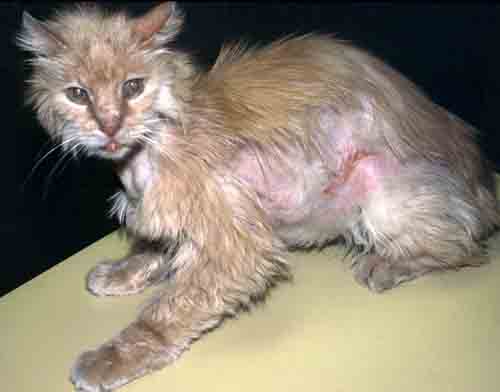
The classic picture is an older cat that is losing weight even though it is eating well or more than usual [11][13]. In the first large case series, the most common signs were [12]:
| Sign | Share of cats |
|---|---|
| Weight loss | 98% |
| Increased appetite | 81% |
| Restlessness or hyperactivity | 76% |
| Fast heart rate | 66% |
| Drinking and peeing more | 60% |
| Vomiting | 55% |
| Heart murmur | 53% |
| Diarrhea | 33% |
Those figures come from cats that were diagnosed decades ago. Today, thanks to routine senior blood tests, many cats are diagnosed earlier, sometimes before any signs appear [15]. Other signs include:
- An unkempt, matted or greasy coat [11][3]
- Yowling or vocalizing more than usual [1][11]. Hyperthyroidism can look like age-related confusion, so vets check the thyroid first [9].
- Muscle loss, especially along the back. About 75% of hyperthyroid cats have lost muscle [16].
- A lump in the neck that a vet can feel in most cats [12][13]
The quiet form: A small number of cats are listless and eat less, instead of being hungry and restless. Weight loss is still common in these cats [6][11][13].
Are cats with hyperthyroidism in pain?
Pain isn't among the typical signs vets list for hyperthyroidism [1][3]. But the disease makes cats feel unwell. They may be restless, hyperactive and constantly hungry [3][12]. Some complications are painful, especially blood clots in the back legs, which are an emergency [7]. The outlook with treatment is generally good [3].
What Happens if Hyperthyroidism Isn't Treated?
Untreated hyperthyroidism is eventually fatal [4]. Over time it can cause:
- Heart disease. Thyroid hormone makes the heart beat fast and hard, and the heart muscle can thicken. This can lead to heart failure. Heart changes often improve once the thyroid is controlled [1][3].
- High blood pressure. In a 2024 study of 401 hyperthyroid cats, 27% had high blood pressure at diagnosis [17]. Very high blood pressure can damage the eyes and cause sudden blindness [5].
- Blood clots that can block blood flow to the back legs have been linked to hyperthyroidism. In one study of 127 cats with these clots, 12 of the 90 cats that were fully tested had hyperthyroidism [18].
- Severe muscle wasting and weight loss [16]
- Harm to the kidneys [1]
- Larger, harder-to-treat thyroid growths [14]
There's no reliable data on how long untreated cats live, because such studies would be hard to do when safe, effective treatments exist [19]. Is it cruel not to treat? Not treating means accepting that the disease will progress. If treatment isn't possible, talk to your vet about keeping your cat comfortable.
What Causes Hyperthyroidism in Cats?
No one knows for sure. No single cause has been found, and most experts think several exposures add up over a lifetime [1][20]. Researchers have studied these possible contributors [20][21]:
| Factor | What studies show | Strength of evidence |
|---|---|---|
| Older age | The strongest and most consistent risk factor [21][22]. | Strong |
| Canned food | Linked to higher risk in several studies, including pop-top cans [20][21][22]. Not found in every study [23]. | Moderate link, not proven cause |
| Flame retardants (PBDEs) in house dust | Hyperthyroid cats had higher levels in two small studies [20][24]. These chemicals have since been phased out in the US [25]. | Weak to moderate |
| BPA in can linings | Cats eating canned food had higher blood BPA, but BPA wasn't linked to thyroid levels [26]. | Weak |
| Iodine in food | Iodine levels in cat foods vary about 30-fold. Its role is unclear [12][20]. | Weak |
| Soy | Soy raised thyroid hormone levels slightly in healthy cats [27]. | Weak |
| Fish, liver or giblet flavors | Linked in some studies, but results conflict [20][21]. | Weak |
| Cat litter and flea products | Linked in some studies, but probably just a marker of indoor cats, which live longer [20][21]. | Weak |
Because the cause is unknown, there's no proven way to prevent hyperthyroidism [21]. Some experts suggest low-risk steps, such as limiting fish flavors and soy, choosing pouches or BPA-free cans, and reducing house dust [20]. There's no need to stop feeding wet food, which has other benefits for cats.
How Vets Diagnose Hyperthyroidism
- Total T4 blood test. This is the main test. It's high in about 90% of hyperthyroid cats [12][13].
- When T4 is normal but your vet is still suspicious. Early disease, or another illness such as kidney disease, can keep T4 in the normal range [11][13]. Vets may repeat T4 in 2 to 4 weeks and add a free T4 test [1]. Free T4 is very sensitive but can be falsely high in cats with other illnesses, so it isn't used alone [11][13].
- Other tests include TSH, a T3 suppression test, and a thyroid scan, which shows exactly where the overactive tissue is [8][11][28].
- A full workup before treatment: blood counts, chemistry, urine tests, blood pressure and an eye check [1].
Many vets include a thyroid test (total T4) in routine senior bloodwork so the disease can be caught early. One veterinary conference paper recommends a senior checkup with this bloodwork every 6 months [8][9].
Treatment Options Compared
There are four main treatments [4][3]. Veterinary guidelines call radioactive iodine the treatment of choice for most cats [1][4][11]. The best option for your cat depends on its other health problems, especially the kidneys, whether you can give medicine every day, what's available near you, and cost [3][28].
| Radioactive iodine | Medication (methimazole) | Prescription diet | Surgery | |
|---|---|---|---|---|
| How it works | One injection destroys the overactive tissue and spares normal tissue [6][3] | Blocks hormone production. Doesn't shrink the growth [4][3] | Very low iodine, which the thyroid needs to make hormone [29] | Removes the overactive glands [6][3] |
| Cure? | Yes, in about 95% of cats [1][3] | No. Lifelong. Signs return if stopped [1] | No. Lifelong [30] | Can be curative [11] |
| Daily effort | Usually none. Some cats later need a daily thyroid supplement [1][3] | Pills or ear gel, usually twice a day, plus regular blood tests [1][6] | Must be the only food, for life. No treats or hunting [4][6] | None after recovery |
| Main downsides | Hospital stay of several days or more, then about 2 weeks of home precautions. Some cats develop an underactive thyroid [1][3][31] | Side effects in nearly 1 in 5 cats, mostly in the first 3 months [32][6] | Works best in mild to moderate cases. Long-term effects unknown [6][11][33] | Anesthesia risk, and low calcium if the nearby parathyroid glands are damaged [1][3] |
| Reversible? | No | Yes | Yes | No |
Radioactive iodine (I-131)
A single injection of radioactive iodine is absorbed by the overactive thyroid tissue and destroys it. No anesthesia is needed [6][3]. In a study of 524 cats, 94.2% were cured [13][34]. Most cats have normal hormone levels within 1 to 2 weeks [3].
Cats must stay at a licensed facility until radiation levels fall. That can be 3 days to several weeks depending on the facility, followed by about 2 weeks of precautions at home, such as limiting close contact and handling litter as instructed [1][3][31]. Some cats develop an underactive thyroid afterward and need a daily thyroid supplement [1][3].
Medication: methimazole or carbimazole
These drugs control hormone levels in about 90% of cats or more while they take them, but don't cure the disease [1][12]. They're given by mouth, or as a gel rubbed on the inside of the ear for cats that are hard to pill [4][3]. In a study of 262 cats, 18.3% had side effects such as poor appetite, vomiting, tiredness or itching and scratching of the face, mostly in the first month. Serious blood problems occurred in 3.8% and went away after the drug was stopped [32]. Regular blood tests are needed, especially early on [1][6].
Medication is often used first, even when radioiodine is planned, because it can be stopped if kidney problems appear [30][35].
Prescription iodine-restricted diet
A very low-iodine prescription diet (Hill's y/d) starves the thyroid of the iodine it needs to make hormone [29]. It must be the cat's only food for life: no treats, other pets' food, table scraps or prey. Even small amounts of other food can make it stop working [4][6][11].
In one study of 49 cats, 83% had normal T4 after 2 to 6 months, but their weight and heart rate didn't improve significantly [33]. It works best in mild to moderate cases [6][11], and its long-term effects aren't known [33][29]. Ask your vet before feeding it to your other cats. Sources differ on whether that's safe [4][28].
Surgery (thyroidectomy)
Removing the overactive glands can cure the disease, but it's less common now that radioiodine is available [3][28]. The main risks are anesthesia in cats with heart disease, and low blood calcium if the tiny parathyroid glands next to the thyroid are damaged [1][3]. The disease can come back if overactive tissue is left behind or grows elsewhere [11][36].
Which Treatment Fits My Cat?
Answer a few questions to see which options are usually worth discussing with your vet. This tool explains the options. It can't choose a treatment for your cat.
The Kidney Connection
An overactive thyroid increases blood flow through the kidneys. That can hide kidney disease, so kidney tests may look normal until the thyroid is treated [1][35]. Once hormone levels come down, kidney values usually rise somewhat. In different studies, about 15% to 49% of cats were found to have kidney disease after treatment [12][35].
Treatment doesn't cause kidney disease. It reveals kidney disease that was already there. Veterinary guidelines call it a myth that methimazole damages the kidneys, and they advise against leaving a cat "a little bit" hyperthyroid to protect the kidneys, because untreated hyperthyroidism harms them too [1]. That's why many vets start with medication for a few weeks to see how the kidneys respond before a permanent treatment [30][35].
An underactive thyroid after treatment also matters. Cats that became hypothyroid and developed kidney problems had shorter survival in one study, so vets recheck thyroid and kidney values after treatment and may prescribe a thyroid supplement [1][30][37]. See our guide to kidney disease in cats.
What to Feed a Cat With Hyperthyroidism
If your cat is on the y/d diet: feed nothing else. No treats, no other cats' food, no table food [4][29].
If your cat is treated with radioiodine, medication or surgery: the goal is to rebuild lost muscle. Some specialists suggest a high-protein diet (about 40% protein) based on animal protein, with few carbohydrates [38]. Muscle can take months to come back [38]. If your cat also has kidney disease, its protein and phosphorus needs change, so let your vet set the diet once kidney values are known [38].
What not to feed: If your cat is on y/d, anything other than y/d. Otherwise, no specific foods need to be avoided, though some experts suggest limiting fish flavors and soy [20].
Is there a non-prescription food for hyperthyroidism? No. The only iodine-restricted diet is a prescription food. Iodine levels in regular cat foods vary widely, so a store-bought food can't be relied on to control the disease [4][12][20].
How Much Does Treatment Cost?
Radioactive iodine has the highest upfront cost. One university teaching hospital lists about $2,300 to $2,900 [39]. Medication is relatively inexpensive month to month [3]. But over a cat's lifetime, radioiodine, medication and surgery cost roughly the same once years of pills and blood tests are added up [1]. Prices vary by region. Pet insurance taken out before diagnosis can help with long-term costs. Haven Pet Insurance offers quotes online, and our cat health insurance guide explains how plans work.
Cat Health Guide may receive a referral reward if you get a quote through this link. Pet insurance generally doesn't cover conditions diagnosed before you enroll, so check a plan's terms before buying.
Cat Health Guide earns a commission if you use JustAnswer through this link.
Life Expectancy of Cats With Hyperthyroidism
With treatment, the outlook is generally good [3]. In well-managed cats, other illnesses, especially kidney disease, have more effect on life span than the thyroid disease itself [1].
- In one study of 167 cats, median survival was about 2 years with medication alone, about 4 years with radioiodine, and about 5.3 years when cats took medication first and then had radioiodine [13]. Differences like these can reflect the cats' age and other illnesses, not just the treatment, so the study doesn't show that medication itself shortens life [19].
- In a 2025 study of 117 cats treated with radioiodine, those that ended up with normal thyroid and kidney values had a median survival of about 4.4 years (1,616 days) [37].
- Cats that already had kidney disease before treatment had shorter survival in a study of cats treated with medication [12][13].
What about a 17-year-old cat? Age alone isn't a reason not to treat. Guidelines recommend treating hyperthyroid cats regardless of other diseases [1]. Your vet can help weigh the options against your cat's overall health.
When to consider euthanasia
Most hyperthyroid cats can be treated successfully. Euthanasia usually comes up only when complications such as heart failure, advanced kidney disease or severe wasting, or other illnesses, mean a good quality of life is no longer possible. End-of-life guidelines describe the goal as keeping a pet comfortable and avoiding suffering, and urge open talks with your vet [40]. Signs to discuss with your vet include not eating, constant hiding and more bad days than good ones. Trouble breathing needs an emergency visit.
What the Research Shows
- Common in older cats. 8.7% of cats in England aged 10 or older had a hyperthyroidism diagnosis in the records of 95,629 cats [2].
- Radioiodine cures most cats. 94.2% of 524 cats treated with radioiodine were cured [13][34].
- Medication side effects. 18.3% of 262 cats on methimazole had side effects, mostly in the first month. 3.8% had serious blood problems that resolved after stopping [32].
- Longer disease, bigger growths. In 2,096 cats, suspected thyroid cancer rose from 0.4% in cats diagnosed within a year to 19.3% in cats with disease for more than 4 years [14].
- Diet controls hormone levels but not always the cat. 83% of 49 cats on an iodine-restricted diet had normal T4 at 2 to 6 months, but weight and heart rate didn't improve significantly [33].
- Blood pressure. 27% of 401 cats had high blood pressure at diagnosis, and about half returned to normal after radioiodine [17].
- An underactive thyroid after treatment matters. Thyroid supplements were linked to longer survival in cats that became hypothyroid after radioiodine but didn't have kidney disease [37].
Questions Owners Ask
What is the life expectancy of a cat with hyperthyroidism?
With treatment, many cats live for years. In one study, median survival was about 4 years after radioiodine and about 2 years with medication alone, though the groups weren't directly comparable [13][19]. Kidney disease affects survival more than the thyroid itself in well-treated cats [1].
Is it cruel not to treat a cat with hyperthyroidism?
Untreated hyperthyroidism is eventually fatal and can cause heart disease, high blood pressure and blindness [4][3][5]. If treatment isn't possible, talk to your vet about comfort and quality of life.
How do I know if my cat has hyperthyroidism?
Watch for weight loss despite a good appetite, drinking more, vomiting, restlessness and an unkempt coat in a cat over about 8 [1][3][12]. A blood test for T4 confirms it in most cats [13].
What should I not feed a cat with hyperthyroidism?
If your cat is on the y/d diet, don't feed anything else, including treats [4][29]. Otherwise, no foods are proven to make it worse, though some experts suggest limiting fish flavors and soy [20].
What is the best food for a cat with hyperthyroidism?
For cats treated with radioiodine, medication or surgery, some specialists suggest a high-protein diet to help rebuild muscle, adjusted if your cat has kidney disease [38]. The only diet that treats the disease itself is the prescription iodine-restricted diet [4].
Is there a non-prescription food for hyperthyroid cats?
No. The only iodine-restricted diet is prescription-only, and iodine varies widely in regular foods [4][12].
Are cats in pain with hyperthyroidism?
Pain isn't among the typical signs vets list, but the disease makes cats restless and unwell, and complications such as blood clots are painful [1][3][7]. With treatment, the outlook is generally good [3].
Is it worth treating an old cat with hyperthyroidism?
Usually, yes. Guidelines recommend treating hyperthyroid cats regardless of other diseases, and the disease worsens over time if untreated [1][14].
Does methimazole damage the kidneys?
No. Veterinary guidelines call this a myth. Kidney values can rise because treatment reveals kidney disease that was already there [1].
How long can a cat go without its thyroid medication?
Methimazole controls the disease but doesn't cure it, so hyperthyroidism comes back in essentially every cat when the drug is stopped [1]. Don't stop or skip doses without talking to your vet.
Can hyperthyroidism in cats be cured?
Yes. Radioactive iodine cures about 95% of cats, and surgery can also be curative. Medication and diet control it but don't cure it [1][11][3].
What's the difference between hyperthyroidism and hypothyroidism?
Hyperthyroidism means too much thyroid hormone. Hypothyroidism means too little, and in cats it is almost always caused by treatment for hyperthyroidism [6]. See hypothyroidism in cats.
Have a question about your cat? Send it to our editors or see where to get help fast. Related: symptoms of a sick cat, heart disease in cats, why cats throw up.
Have a Question for our editors about Cat Hyperthyroidism?
Do you have a feline hyperthyroidism question for our editors. We'll answer it for free! Please include information such as age, sex, breed, medical history, symptoms, diagnosis, diet, changes in behavior, diet and medications.
We will do our best to get back to you quickly (it depends on how many questions we receive each day). If you need an immediate response we suggest using this online cat veterinary answer service that is available now.
What Other Visitors Have Asked about Hyperthyroidism in Cats and Answers
Click below to see contributions from other visitors to this page...
Cat Hyperthyroidism Diet Not rated yet
Hello,
My 14 year old, female, domestic short hair/mixed breed cat has been diagnosed with chronic kidney disease and hyperthryoidism. We discovered …
Cat Having Seizures Not rated yet
Reader Question: Hyperthyroidism and Cat Seizures
I hope someone can help me. I have a 2 year old male cat that has recently developed some worrisome …
Sources
- Carney HC, Ward CR, Bailey SJ, Bruyette D, Dennis S, Ferguson D, Hinc A, Rucinsky AR. 2016 AAFP Guidelines for the Management of Feline Hyperthyroidism. J Feline Med Surg. 2016;18(5):400-416. doi:10.1177/1098612X16643252. catvets.com
- Stephens MJ, O'Neill DG, Church DB, McGreevy PD, Thomson PC, Brodbelt DC. Feline hyperthyroidism reported in primary-care veterinary practices in England: prevalence, associated factors and spatial distribution. Vet Rec. 2014;175(18). doi:10.1136/vr.102431. rvc-repository.worktribe.com
- Cornell Feline Health Center. "Hyperthyroidism in Cats." Cornell University College of Veterinary Medicine. Updated 30 Apr 2026. vet.cornell.edu
- American Animal Hospital Association. 2023 AAHA Selected Endocrinopathies of Dogs and Cats Guidelines, "Feline Hyperthyroidism: Therapy." aaha.org
- Chetboul V, Biourge V. "Systemic Hypertension in Cats." In: Pibot P, et al., eds. Encyclopedia of Feline Clinical Nutrition. IVIS, 2009. ivis.org
- Peterson ME, Kritchevsky JE. "Disorders of the Thyroid Gland in Cats." Merck Veterinary Manual, Pet Owner Version. Full review Aug 2018; updated Sep 2024. merckvetmanual.com
- Cummings School of Veterinary Medicine at Tufts University, HeartSmart. "Rear Limb Weakness." vet.tufts.edu
- American Animal Hospital Association. 2023 AAHA Selected Endocrinopathies of Dogs and Cats Guidelines, "Feline Hyperthyroidism: Categorical Approach to Diagnosis Based on Clinical Presentation." aaha.org
- Colleran EJ. "Managing the Complicated Senior Cat." LAVC Annual Conference, Lima, 2021 (updated 19 Feb 2023). ivis.org
- Niessen SJM, Shiel R, Wehner A, Campos M, Daminet S, Fracassi F, Graham P, Korchia J, Lathan P, et al. (ESVE/SCE). Agreeing Language in Veterinary Endocrinology (ALIVE): Hypothyroidism, Hyperthyroidism, (Euglycaemic) Diabetic Ketosis/Ketoacidosis, and Diabetic Remission: a modified Delphi-method-based system to create consensus definitions. Vet Sci. 2026;13(1):35. doi:10.3390/vetsci13010035. mdpi.com
- Heseltine J. "Hyperthyroidism in Animals." Merck Veterinary Manual, Professional Version. Reviewed/updated May 2024. merckvetmanual.com
- Scott-Moncrieff JC. "Feline Hyperthyroidism." Chapter 4 in: Feldman EC, Nelson RW, Reusch CE, Scott-Moncrieff JC, eds. Canine and Feline Endocrinology, 4th ed. Elsevier; 2015. confluence.cornell.edu
- Vaske HH, Schermerhorn T, Armbrust L, Grauer GF. Diagnosis and management of feline hyperthyroidism: current perspectives. Vet Med (Auckl). 2014;5:85-96. doi:10.2147/VMRR.S39985. dovepress.com
- Peterson ME, Broome MR, Rishniw M. Cross-sectional analysis of 2,096 hyperthyroid cats referred for radioiodine therapy, by disease duration (prevalence and degree of thyroid pathology increases with duration). J Feline Med Surg. 2016 (epub 2015);18(2):92-103. doi:10.1177/1098612X15572416. doi.org
- Kvitko-White HL. "Recognizing and confirming feline hyperthyroidism." dvm360, 9 Feb 2021. dvm360.com
- Xifra P, Serrano SI, Peterson ME. Effect of radioiodine treatment on muscle mass in hyperthyroid cats. J Vet Intern Med. 2022;36(6):1931-1941. doi:10.1111/jvim.16560. doaj.org
- Stammeleer L, Xifra P, Serrano SI, Rishniw M, Daminet S, Peterson ME. Blood pressure in hyperthyroid cats before and after radioiodine treatment. J Vet Intern Med. 2024. doi:10.1111/jvim.17032. doaj.org
- Smith SA, Tobias AH, Jacob KA, Fine DM, Grumbles PL. Arterial thromboembolism in cats: acute crisis in 127 cases (1992-2001) and long-term management with low-dose aspirin in 24 cases. J Vet Intern Med. 2003;17:73-83. confluence.cornell.edu
- Bruyette DS. "Just ask the expert: What is the lifespan of cats with hyperthyroidism?" dvm360, 1 Oct 2010. dvm360.com
- Peterson ME. Hyperthyroidism in cats: what's causing this epidemic of thyroid disease and can we prevent it? J Feline Med Surg. 2012;14(11):804-818. doi:10.1177/1098612X12464462. doi.org
- McLean JL, Lobetti RG, Schoeman JP. Worldwide prevalence and risk factors for feline hyperthyroidism: a review. J S Afr Vet Assoc. 2014;85(1):Art. #1097. core.ac.uk
- Edinboro CH, Scott-Moncrieff JC, Janovitz E, Thacker HL, Glickman LT. Epidemiologic study of relationships between consumption of commercial canned food and risk of hyperthyroidism in cats. J Am Vet Med Assoc. 2004;224(6):879-886. doi:10.2460/javma.2004.224.879. doi.org
- Olczak J, Jones BR, Pfeiffer DU, Squires RA, Morris RS, Markwell PJ. Multivariate analysis of risk factors for feline hyperthyroidism in New Zealand. N Z Vet J. 2005;53(1):53-58. doi:10.1080/00480169.2005.36469. researchonline.jcu.edu.au
- Norrgran J, Jones B, Bignert A, Athanassiadis I, Bergman Å. Higher PBDE serum concentrations may be associated with feline hyperthyroidism in Swedish cats. Environ Sci Technol. 2015;49(8):5107-5114. doi:10.1021/acs.est.5b00234. research.slu.se
- US Environmental Protection Agency. "Polybrominated Diphenyl Ethers (PBDEs)." Updated 16 Mar 2026. epa.gov
- Kovaříková S, Maršálek P, Habánová M, Konvalinová J. Serum concentration of bisphenol A in elderly cats and its association with clinicopathological findings. J Feline Med Surg. 2021;23(2):105-114. doi:10.1177/1098612X20932260. doi.org
- White HL, Freeman LM, Mahony O, Graham PA, Hao Q, Court MH. Effect of dietary soy on serum thyroid hormone concentrations in healthy adult cats. Am J Vet Res. 2004;65(5):586-591. doi:10.2460/ajvr.2004.65.586. rex.libraries.wsu.edu
- Morris Animal Foundation. "Hyperthyroidism in Cats." 22 Jul 2021. morrisanimalfoundation.org
- Veterinary Partner (VIN). Iodine-restricted diet for feline hyperthyroidism (no byline or date shown). veterinarypartner.vin.com
- Niessen SJM. "Feline Hyperthyroidism: Drugs, Diet or Radioiodine?" WSAVA World Congress Proceedings, 2014 (VIN). vin.com
- Virginia-Maryland College of Veterinary Medicine, Veterinary Teaching Hospital. "Radioactive Iodine Therapy" (client handout). vth.vetmed.vt.edu
- Peterson ME, Kintzer PP, Hurvitz AI. Methimazole treatment of 262 cats with hyperthyroidism. J Vet Intern Med. 1988;2(3):150-157. doi:10.1111/j.1939-1676.1988.tb02812.x. doi.org
- Hui TY, Bruyette DS, Moore GE, Scott-Moncrieff JC. Effect of feeding an iodine-restricted diet in cats with spontaneous hyperthyroidism. J Vet Intern Med. 2015;29(4):1063-1068. doi:10.1111/jvim.13368. assets.contentstack.io
- Bodey AL. "Feline hyperthyroidism – part two: evidence-based medicine." Vet Times, 11 Aug 2014. vettimes.co.uk
- Daminet S. "Renal Function and Feline Hyperthyroidism: Should we Care?" EVC Voorjaarsdagen, Amsterdam, 2008. ivis.org
- Birchard SJ, de Brito Galvao JF. "Thyroidectomy in the Dog and Cat." In: Bojrab MJ, et al., eds. Current Techniques in Small Animal Surgery, 5th ed. ("Endocrine System"). IVIS, updated 15 May 2022. ivis.org
- Cox SE, Wakeling J, Hall T, Williams TL. Survival of radioiodine treated hyperthyroid cats that are euthyroid and hypothyroid after treatment, and effect of levothyroxine supplementation on survival time of cats with iatrogenic hypothyroidism. J Vet Intern Med. 2025;39(1). doi:10.1111/jvim.17295. doaj.org
- CatWatch (Belvoir Media Group with Cornell Feline Health Center). "Feeding Hyperthyroid Cats." 20 Apr 2020. catwatchnewsletter.com
- University of Illinois Veterinary Teaching Hospital. "Guidelines for I-131 Therapy." vetmed.illinois.edu
- AAHA/IAAHPC. 2016 End-of-Life Care Guidelines, "Summary: challenges and opportunities." aaha.org