How to Identify and Treat a Cat Urinary Proble
"A cat urinary problem or changes in the way your cat urinates almost always indicates some type of medical problem. The term FLUTD or feline lower urinary tract disease is a term that refers to a number of conditions that affect the urinary tract and urethra such as cystitis, urolithiasis (urinary stones) , urethral obstruction (blockage), urethral plugs or cancer. Male cats in particular should be seen by a veterinarian to ensure that there is nothing blocking the urine from leaving the body. In females and males urinary problems can be a sign of infection or even a behavioral issue. A chronic obstruction can result in death, so any sign of urinary distress should trigger a trip to the veterinarian, particularly if a cat appears to be crying out in pain, or if you see other signs such as a cat that is passing no or a small amount of urine."
A cat urinary problem can be caused by many
things. Most common is a urinary
tract infection. Bladder stones can
also cause problems. Less common are tumors and anatomical
abnormalities of the urinary tract. If caught early, most urinary
problems are easily treated and not too serious. If untreated, however,
they can become serious. Take your cat to the vet if she shows symptoms
of a cat urinary problem.
Symptoms of a Cat Urinary Problem
Symptoms of a cat urinary problem may
include:
- More frequent urination
-
Straining to urinate
- Pain during urination
-
Dribbling urinate
-
Blood in cat urine
-
A litter trained cat having “accidents” in the house outside of the litter box, often on a smooth surface such as a bathtub or tile
-
Licking the genitals after urination (in an attempt to relive pain, itching, and burning sensation)
The symptom that gets the most attention is when a litter trained cat begins to urinate in the house. Owners often assume the cat is doing this on purpose or that it is a behavioral problem, and want to punish the cat for doing it. But it’s often a medical problem. Take your cat to the vet to rule out any health problems first. If your cat gets a clean bill of health, then talk to your vet about how best to deal with the behavior.
Symptoms and Common Causes
|
|
|---|---|
|
Symptom of Cat Urinary Problem |
Possible Cause and Action |
|
Your cat strains to urinate or urinates in small amounts. Urine may contain blood and your cat may be vomiting. |
Urinary Tract Infection or there is something blocking the urinary tract such as a bladder stone. If your cat is acting normally (behavior, appetite) then see a veterinarian. If male cat and behavior is not normal then seek emergency care to check for blockage. |
|
Urine that has some blood in it |
Injury to the bladder. See veterinarian. |
Cat leaking urine, particularly when lying down |
Incontinence problem. See veterinarian and test for FeLV (feline leukemia virus) and endocrine (thyroid) problems. |
Urine spray and urination outside of the litter box |
Behavioral problem. See our guide to changing behavior. |
Frequent Urination |
In older cats it could be a sign of kidney disease or hypothyroidism |
|
Cat Urine dark yellow color |
See veterinarian who will check for liver disease. Usually accompanied by other symptoms such as weakness, weight loss, desire not to eat. |
Diagnosing a Cat Urinary Problem
To diagnose a cat urinary problem, your vet
will need to perform a urinalysis. This is a test that checks for the
presence of blood, protein, sugar, and other substances in the urine.
The urine can also be cultured to see if there is bacteria growing in
it. The culture takes a couple of days, so your vet may go ahead and
prescribe antibiotics for your cat without waiting for the results if
he or she thinks your cat has a urinary tract infection.
The vet may also take x-rays of your cat to
check for bladder stones. An ultrasound could also be used for this
purpose. These tests would also show any tumors or anatomical
abnormalities, if present.
Treating a Cat Urinary Problem
Treating a cat urinary problem is often as easy as prescribing a short course of antibiotics for a urinary tract infection. After a couple of weeks, the urine should be tested again to make sure the infection is all cleared up. In stubborn cases, antibiotics may need to be used for longer periods of time.
Feline Idiopathic Cystitis (FIC): Idiopathic refers to no known cause. It is suspected that potential causes may include a change in a cats environment, a change in eating schedule or diet, or the addition of more pets. Once the stress on the cat is eliminated or reduced, such as providing a safe area to urinate, or the addition of a climbing post or toys to allow the cat to express predatory behaviors, results in improvement. Changes in diet to a urinary formulation do not appear to have any affect.
Feline Urolithiasis (Stones): A stone is formed when minerals start to block the feline urinary tract. Treatment depends on the type of stones; such as surgery to remove calcium oxalate stones or dietary change to dissolve the stones as in the case of struvite stones. After treatment, dietary modification can help avoid future problems.
Feline Urethral Obstruction: This is the most worrisome cat urinary problem and refers to either complete or partial blockage. A differentiating symptom is a cat that seems to cry out in pain. This can be caused by urinary stones or urethral plugs, which are made of a soft substance that contains mucus/protein, minerals and cell material. Male cats are at greater risk due to the narrower urethra. The blockage makes it difficult for the body to remove toxins, resulting in a cat eventually losing consciousness. The problem can ultimately cause death from heart failure.
How to Prevent a Cat Urinary Problem
If your cat frequently suffers from feline urinary tract infections you might want to consider adding a natural remedy to the diet that promotes balance in the bladder and urinary tract. One product made specifically for this purpose is PetAlive UTI-Free Formula. It is made specifically for this problem and contains ingredients such as:
- Arctostaphylos uva ursi helps to
maintain normal pH levels in the urinary tract. (Larsson B, Jonasson A,
Fianu S. “Prophylactic effect of UVA-E in women with recurrent
cystitis: a preliminary report.” Current Therapeutic Research
1993;53(4):441-443. ) This herb contains the glycoside arbutin as the
main active constituent.
- Berberis vulgaris contains
berberine as a main constituent, known for its restorative effect on
the bladder and urinary tract. (Li SY, Ling LH, Teh BS, et al.
“Anti-inflammatory and immunosuppressive properties of the bis-
benzylisoquinolines: in vitro comparisons of tetrandrine and
berbamine.” Int J Immunopharmacol 1989;11(4):395-401.)
If bladder stones are present, they can
sometimes be broken up with medication, but often must be surgically
removed. If your cat is prone to forming stones, your vet may recommend
a special diet that will help prevent them.
If your cat has a tumor, your vet will talk
to you about the best way to treat it. It will depend on the type,
size, and location of the tumor.
Anatomical abnormalities may be able to be
corrected surgically. It will depend on the exact nature of the problem.
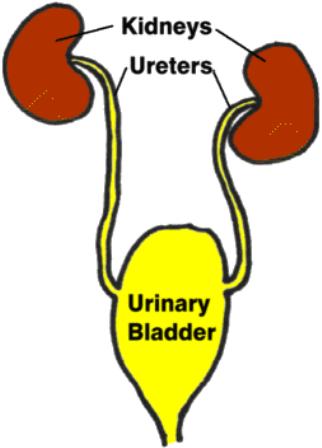
Feline Urinary Infection usually refers to a cat bladder infection or an infection that is able to take hold due to diet related crystal formation in the urine
Source: Maristavet
There are several steps an owner can take to help cats prevent a cat urinary problem including:
- Keep your cat on a predictable routine
- Clean the litter box frequently and place it in a private, quiet area
- Match the number of litter boxes to the number of cats in the home
- Always provide fresh water and consider adding a bit of cranberry juice to the water in the morning
- Feed a high quality commercial diet. Avoid diets that have
added acidifiers, since this can cause metabolic acidosis, kidney
issues and an imbalance of minerals.
References:
The Veterinarian's Guide to Your Cat's Symptoms
Non-Prostatic Dysuria
Holt, P. E.
Cornell College of Veterinary Medicine
Help Others with a Cat Urinary Problem
Do you have a cat urinary system related question for our editors or a helpful story to share?
Please include your cat's medical history such as age, sex, breed, medical history, symptoms, diagnosis, diet, changes in behavior, diet and medications.
We will do our best to get back to you quickly (it depends on how many questions we receive each day). If you need an immediate response we suggest using this online cat veterinary answer service that is available 24 hours a day. You only pay for answers that you see and then accept.
Vet Suggestions to Questions from Other Readers
Click below to see contributions from other visitors to this page...
Cost of Cat Urinary Blockage Treatment 
Reader Question: Is this a cat urinary emergency?
My cat was going in and out of the litter box without peeing. I could not touch him and he was acting …
Cat Leaks Urine
My Cat is a little over 9 years of age. She is still very active as an older cat. But the poor thing meows constantly and always seems distressed.
…
Recurring Cat Bladder Infection 
My 4 yr.old male cat was being treated for a bladder infection after 50 Baytrils I ask my vet to do someting else.
An x-ray was taken which showed no …
Causes of Cat Urination Outside of Litter Box Not rated yet
Reader Question: Helping a Cat that is Urinating Outside the Litter Box
Our 15 year old male cat has been urinating everywhere including beside the …
Cat Urinary Blockage Not rated yet
Reader Question: Cat Urinary Problem or Blockage
Hi there,
My male brown tabby cat is 3.5 years old. He has been acting normal all day today (eating, …
Cat with crystals in the urine Not rated yet
Reader Question: Is This The Right Treatment For A Cat With Crystals In Urine?
My cat is litter trained and started peeing outside the box and more …
Cat Drinking Too Much Water and Urine is Discolored Not rated yet
Reader Question : My cat's urine is brown, what should we do?
Hello, I rescued a Persian cat who had been found hanging around a local restaurant, …
