Arthritis Cat Treatment
"Arthritis cat treatment can take many forms including making your cat's environment easier to navigate, conventional anti inflammatory medications and natural treatment options such as diet and supplements. A veterinary chiropractor can also be of help."
If you notice your older cat moving differently than normal, it might be the onset of arthritis. The most common form of arthritis is osteoarthritis which is also called a degenerative joint disease. The most commonly affected areas are the elbows, stifles and hips. Arthritis is seen in up to 90% of cat over age 12.
The goal of cat arthritis treatment is to help your cat maintain a good quality of life. This means helping your cat stay mobile with as little pain and restriction as possible. You also want to work with your cat so that any additional damage to the joints is slowed.
Areas where you can hep your cat with arthritis cat treatment include:
- surgery
- management of your cats environment
- medications
- joint supplements
- dietary change
- physiotherapy (exercise)
- weight control
Here's a helpful podcast from the American Veterinary Medical Association on arthritis cat treatment:
Cat Arthritis Treatment Video
Here are some helpful videos produced by the Morris Animal Foundation, an organization dedicated to pet health research:
Arthritis Cat Treatment Methods
There are many simple things you can do to help a cat with feline arthritis:
Weight Loss: Arthritis is a joint disease. If your cat is overweight, then she is placing more weight on the inflamed joints than is necessary.
Build Muscle tone with Exercise: Muscle strength can help compensate for joint problems. Consider taking your cat for walks with a cat harness or institute play sessions to keep your cat active. If you cat doesn't like to exercise, then massage could help.
Acupuncture: This can be an effective technique to reduce pain.
Keep Your Cat Warm: If your cat likes to go outside, try and limit the exposure to cold weather. Cold weather tends to stiffen the joints.
Provide a Soft Bed: Softer bedding will be more comfortable for your cat than hard. Consider providing a warm blanket such as fleece or even a heated bed such as the one offered by Thermo Kitty Cat Bed offered by Amazon.
Provide heat: Given your cat a heated surface to cuddle up on could help the joints. Consider using a hot water bottle wrapped in a towel. Do not use a heater or other appliance that could result in burns.
Raise Your Cat's Water and Food Bowels: Instead of having your cat bend down to eat, make it easier by slightly raising each dish. You may want to have more than one bowl if you cat has trouble getting around or needs to climb different levels.
Lower the Litter Box Walls: Make it easier for your cat to enter and exit the litter box. Put boxes throughout the house, particularly if your house has more than one level. Keep the litter at a level that is easy for your cat to work with, vs. making it very deep.
Buy Ramps: Instead of steps consider ramps up to places your cat likes to sleep. Cats naturally like areas where they can look out and down on the home.
Grooming Help: Think about brushing your cat to help with the grooming process.
Diet: There are special commercial diets that are formulated to help cats with arthritis. These diets contain certain fatty acids which are known to help reduce inflammation: alpha linoleic acid and docosahexenoic acid. They also include the antioxidants vitamin C, E, methionine (help with cartilage), glucosamine and chondroitin sulphate.
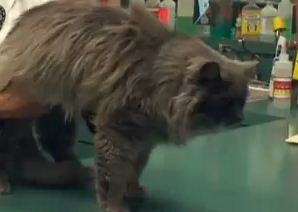
Arthritis Cat Treatment: Older
Cat with Paw Arthritis due to pressure placed on paws from overweight
condition and declawing which changes the structure of the paw, making
it difficult for cat to support weight. Cat arthritis treatment
with glucosamine brought some relief. A veterinary chiropractor can
also help with any problems that develop in the body due to arthritis
in the paws.
Source: Morris Animal Foundation
Conventional Medicine for Arthritis Cat Treatment
Arthritis is a disease which causes joint inflammation. Medications that are known to reduce inflammation can be helpful. These include:
NSAIDs: Products that contain ibuprofen such as carprofen, meloxicam, tepoxalin can help. They don't cure the problem, but do provide some relief from pain. Recent advances in these types of drugs now provides long term care. One drug, meloxicam (Metacam®) has recently been identified for this purpose.
Another commonly prescribed analgesic, buprenorphine, also has side effects such as changes in behavior, pupils that are dilated and a reduced appetite.
Opiates: this is another class of drugs with the specific product called Tramadol. These work by inhibiting sertonin, a natural substance which impacts the muscles. Possible side effects are vomiting and lethargic behavior.
Opiates and NSAIDs can be prescribed together.
Surgery: Surgery is used for feline arthritis treatment where the bone needs to be repaired or where the joint is unstable. Surgery is also used for hip dysplasia (unstable hip joint where the ligaments don't keep the hip tightly in place).
Natural Remedies for Cat Arthritis Treatment
There is a significant amount of press in human
medicine around neutracueticals, foods that can help to restore body
function. Specifically,
natural Glucosamine is often recommended, although the evidence isn't
clear as to if they work. Glucosamine is through to slow down the
wearing away of cartilage in the joints. They are safe for your cat and
therefore probably worth a try.
Other supplements contain both glucosamine and chondroitin. These are popular with owners, although there is mixed clinical evidence.
Other homeopathic ingredients that help to naturally support the muscles and joints include Harpagophytum procumbens(Devil's Claw) , Arthrospira platenis (Spirulina).
One product worth researching for arthritis cat treatment that combines glucosamine with the supplements mentioned about is PetAlive Muscle & Joint Support Formula which is made specifically to treat symptoms, relieve pain and reduce stiffness of arthritis, rheumatism and degenerative joint disease in Pets.
One other product to consider which just combines glucosamine and chondroitin is Only Natural Pet Super Daily Vitamins + Joint Support.
Have a Cat Arthritis Related Question or Want to Share a Story that could help others?
Do you have a question for our editors about arthritis in cats or have a helpful story to share? One question will answered by our editors each week.
We will do our best to get back to you quickly (it depends on how many questions we receive each day). If you need an immediate response we suggest using this online cat veterinary answer service that is available now.
Questions from Other Readers and Answers from Our Vet
Click below to see contributions from other visitors to this page...
Alternative Medication for Treating Cat Arthritis Not rated yet
Reader Question: Alternative to Chondrotin
My cat is allergic to beef and chicken. One of the ingredients in most feline arthritis medicines is chondrotin …
Cat Arthritis Remedies Not rated yet
Reader Question Cat Arthritis Remedies
What is the best way to give a cat joint relief, ie: glucosomine, msm, etc. My cat won't eat wet food anymore …
Does My Cat Have Feline Arthritis Not rated yet
Our cat Spike, aged 9, has never been the brightest and most coordinated cat I have had. From an early age he has jumped on to things and missed. The …
References:
Peck, Graham
Osteoarthritis and Treatment Options in Pets
The Doctors Book of Home Remedies for Dogs and Cats
Prevention Magazine
Feline Arthritis
Sarah Caney, BVSc, PhD, DSAM(Feline),
MRCVS
Feline Advisory Bureau, Taeselbury, Tisbury, Wiltshire, UK
American Veterinary Medical Association
